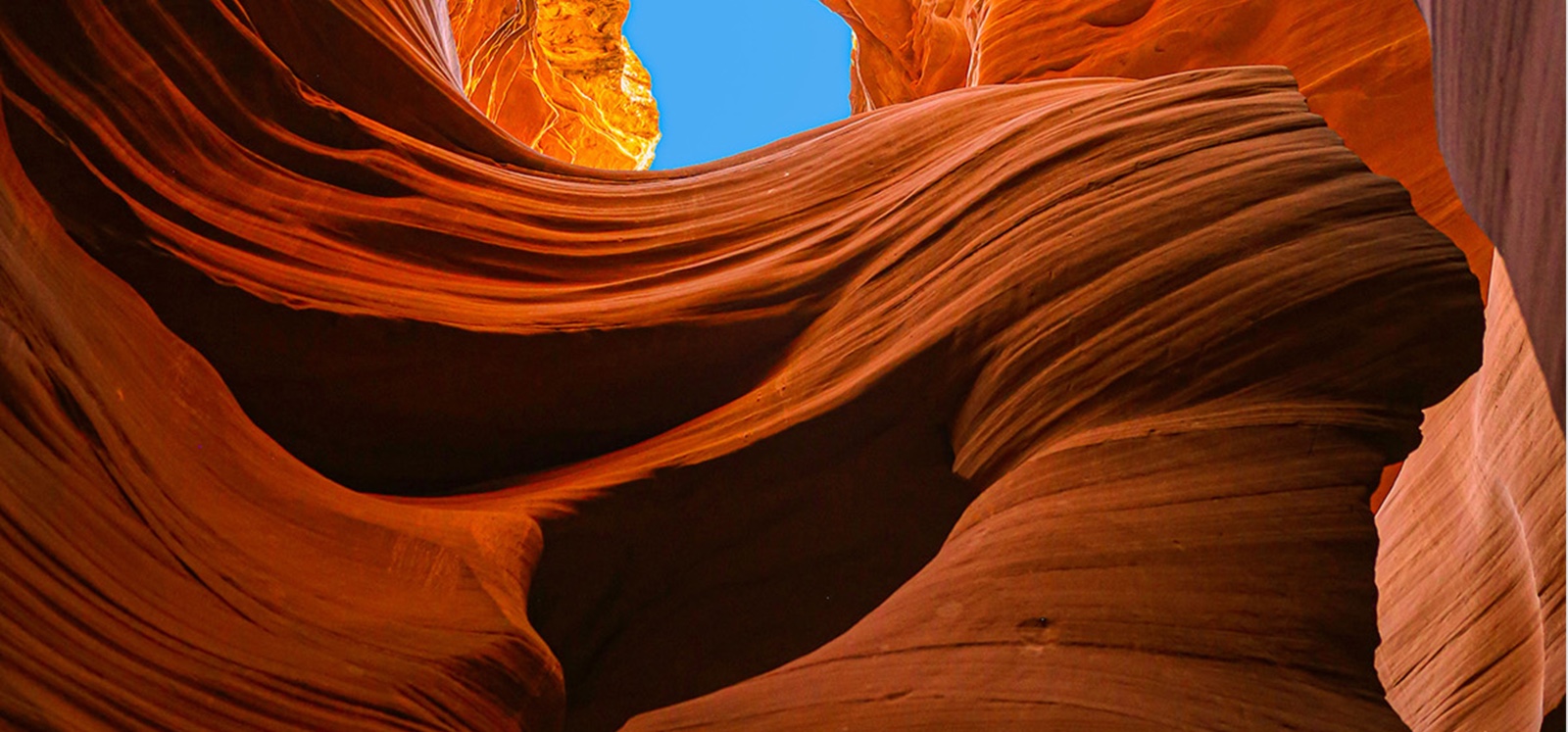
There is no single best time to visit Antelope Canyon. There is a best time for you, and it depends on whether you are chasing the famous light beams, avoiding crowds, or simply working around the rest of your Arizona trip.
Here is what each season actually looks like on the ground, from people who guide here year round.
The Short Answer
- For light beams: late spring through early fall, around midday.
- For the best balance: April to May, or late September to October. Comfortable temperatures, good light, fewer people than peak summer.
- For the fewest crowds: December through February.
- For the most reliable weather: spring and fall, outside monsoon season.
Month by Month at a Glance
| Months | Temps | Crowds | Light beams |
|---|---|---|---|
| Mar to May | Mild, 60s to 80s F | Building | Beginning, mid-March onward |
| Jun to Aug | Hot, often 95 to 100 F | Peak | Best odds |
| Sep to Nov | Comfortable, 55 to 85 F | Easing | Through early October |
| Dec to Feb | Cool, 45 to 55 F days | Lightest | Rare |
When Can You See the Light Beams?
The light beams, those defined shafts of sunlight that land on the canyon floor, happen in Upper Antelope Canyon. They need the sun high enough to drop straight through the narrow opening above, which generally means late March through early October, around the middle of the day (roughly 10:30 AM to 1:00 PM). The odds are best from May through September.
One honest caveat: beams are a weather and season dependent bonus, not something anyone can promise. An overcast morning can mute them completely. Plenty of our favourite canyon photographs have no beam in them at all, because the canyon's colour and shape carry the image on their own.
If beams are your main goal, book a midday slot in summer and treat anything you get as the bonus it is.
Spring: March to May
Mild temperatures, gradually increasing daylight, and beams starting to appear by mid-March. Early spring still has room to breathe before the summer rush arrives. This is one of the two windows we most often recommend to first-time visitors.
Summer: June to August
Peak season, for good reason: this is when the light is most dramatic. It is also the hottest stretch of the year, frequently sitting in the mid to upper 90s F, and the busiest. Book further ahead than you think you need to, carry more water than you think you need, and expect company in the canyon.
Fall: September to November
Our quiet favourite. Temperatures settle into a comfortable range, the crowds thin after Labor Day, and you still have reasonable beam chances into early October. Late September and October deliver most of what summer offers with noticeably less pressure.
Is Antelope Canyon Open in Winter?
Yes. Tours run year round, and winter has real advantages: the smallest crowds of the year and a softer, lower-angled light that brings out different tones in the sandstone. Days are cool, typically in the 40s and 50s F, with nights near freezing, so dress in layers.
Light beams are rare in winter. The canyon is not. If your priority is space to actually look around rather than a specific photograph, this is the most underrated time to come.
What About Monsoon Season?
This is the part worth reading carefully. Northern Arizona has a monsoon season roughly from July through September, which brings sudden, heavy rainfall.
Slot canyons are drainage channels. Rain falling miles away can send water through the canyon with very little warning, which is why Antelope Canyon closes during flash flood warnings. Those closures are not negotiable and they are not a formality. They are the single most important safety rule in this landscape.
Practically, that means if you visit in late summer you should build a little flexibility into your plans. Tours can be cancelled or rescheduled on short notice when conditions require it, and that decision is always made in favour of caution.
What Should You Wear?
Closed-toe shoes are required on every tour, year round. Beyond that, dress for the season and for sand:
- Summer: light layers, a hat, sunglasses, sunscreen, and more water than feels necessary.
- Winter: layers you can add and remove, since the canyon floor runs cooler than open ground.
- Any season: expect fine sand. Leave anything you would hate to get dusty behind.
Our packing checklist covers exactly what is permitted at each stop, including the items Navajo Nation regulations do not allow inside the canyons.
Does Timing Differ for Upper and Lower Antelope Canyon?
It does. Upper is where beams occur, so timing matters far more there. Lower Antelope Canyon photographs beautifully throughout the day, because its narrower, taller shape bounces light down the walls instead of dropping it in a single shaft. If your schedule cannot accommodate a midday slot, Lower is the more forgiving choice.
We cover the full comparison in Upper vs Lower Antelope Canyon, including terrain, difficulty, and crowds.
Planning the Rest of Your Trip
Page sits about two and a half hours from the Grand Canyon South Rim, which makes it an easy addition to a wider Arizona loop. Horseshoe Bend and Lake Powell are both minutes away, so most visitors find a single day here stretches further than expected. Our guide to things to do near the Grand Canyon lays out what is within reach and how long each stop takes.
Whenever you come, we depart daily from our office in Page and handle the driving, the permits, and the guiding. Have a look at the tour options, or ask us directly which month suits what you are hoping to see. We will tell you honestly, even if the answer is a different season than the one you had in mind.
Written by The Ti' Let's Cruise Team
Explore Our Tours