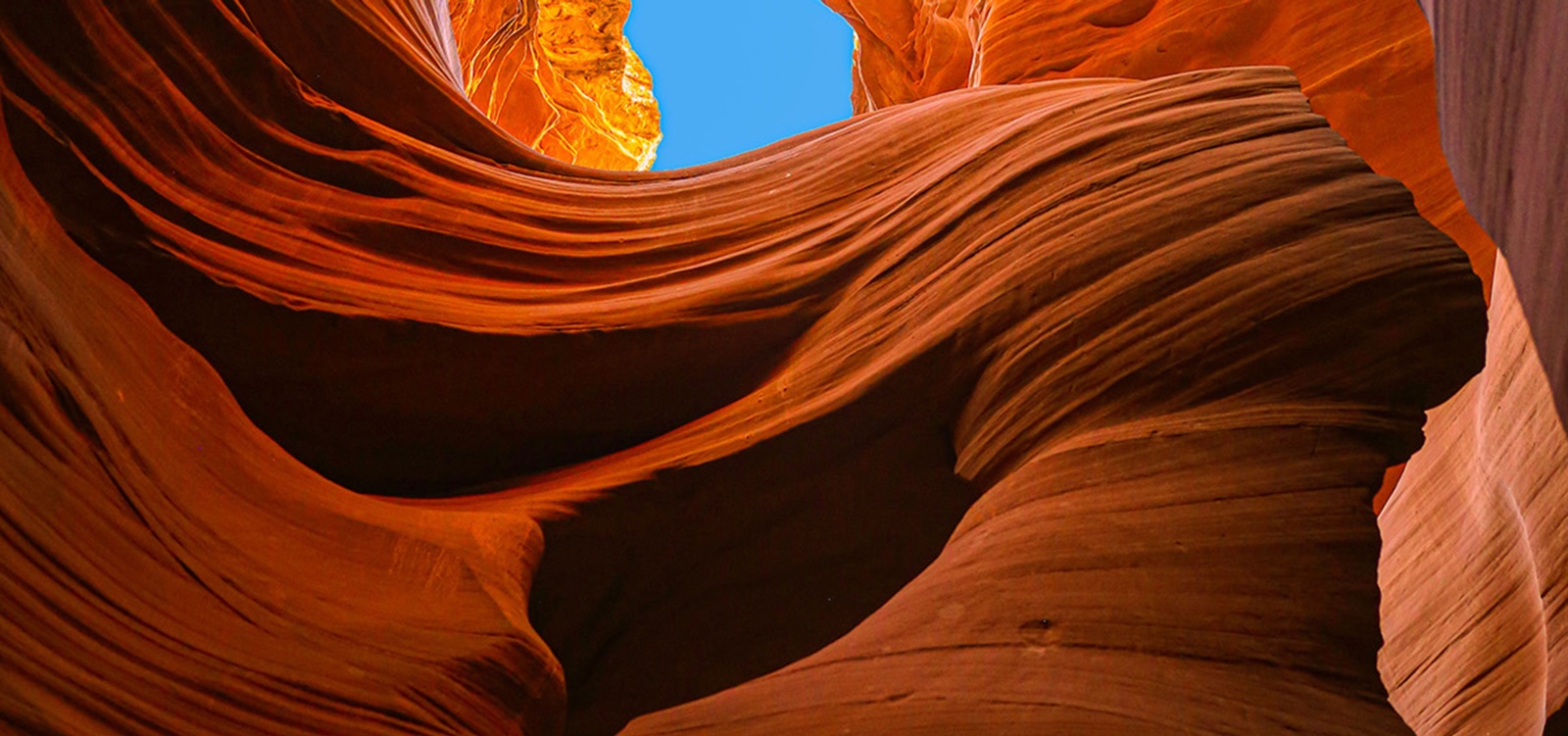
It is the question we hear more than any other: should I visit Upper or Lower Antelope Canyon? Both are extraordinary, both sit on Navajo Nation land just outside Page, Arizona, and both can only be seen with a Navajo guide. But they are genuinely different experiences, and the right choice depends on your mobility, your camera, and what you most want to walk away with.
Here is the honest comparison, from the people who guide both.
The Short Answer
Choose Upper Antelope Canyon if you want flat, easy walking and the famous light beams. Choose Lower Antelope Canyon if you want a more adventurous walk, thinner crowds, and the sculpted, wave-like walls that photograph beautifully all day long.
At a Glance
| Lower Antelope Canyon | Upper Antelope Canyon | |
|---|---|---|
| Terrain | Metal staircases and narrow passages | Flat, sandy, no stairs |
| Difficulty | Moderate, needs reasonable mobility | Easy for most visitors |
| Known for | Sculpted color and shapes | Midday light beams |
| Crowds | Generally lighter | Generally busier |
| Best for | Photographers, active travelers | Families, limited mobility, beam seekers |
Lower Antelope Canyon: The Adventurous One
Lower Antelope Canyon is entered by descending a series of metal staircases into a crack in the desert floor. From there you walk through narrow, winding passages that open and close around you. It is moderate in difficulty and asks for reasonable mobility, but the reward is a canyon that feels like a discovery rather than a viewing.
Because the corridor is narrower and taller, light bounces down the walls instead of landing in a single shaft. The result is the deep orange, purple, and rose coloring that Antelope Canyon is famous for, and it holds up throughout the day rather than only at noon. If your main goal is photographs, this is the canyon we point you toward. It is featured in every one of our tour packages, including the Canyon Overlook Package.
Upper Antelope Canyon: The Accessible One
Upper Antelope Canyon is a flat, sandy walk at ground level with no stairs to climb, which makes it the more comfortable option for young children, older travelers, or anyone with mobility concerns. You walk in and out the same way, through towering walls that rise well above you.
It is also where the light beams happen. Because the canyon is wider at the top and narrower at the bottom, sunlight can drop straight through the opening and land on the sand floor as a defined shaft of light. That single feature makes Upper the more popular and more crowded of the two.
When Are the Antelope Canyon Light Beams Visible?
Light beams appear in Upper Antelope Canyon when the sun is high enough to reach the canyon floor, which generally means late March through early October, around the middle of the day (roughly 10:30 AM to 1:00 PM). Outside that window the beams fade, though the canyon itself stays every bit as striking.
Worth saying plainly: beams are a weather and season dependent bonus, not a guarantee. Overcast skies can mute them entirely. Plenty of our favorite canyon photos have no beam in them at all.
Can You Visit Both in One Day?
Yes, and it is the most complete way to see the canyons. Our Trilogy Tour pairs a guided hike through Lower Antelope Canyon with more than an hour inside Upper Antelope Canyon, then closes the day with a catered lakeside lunch and a boat cruise on Lake Powell. Seeing them back to back is the clearest way to understand how different two slot canyons a few miles apart can be.
What Both Canyons Have in Common
Whichever you choose, a few things stay the same:
- A Navajo guide is required. Neither canyon can be visited independently.
- Closed-toe shoes are required on all tours, and the ground is sandy in both.
- Backpacks, tripods, selfie sticks, and video recording are not permitted inside either canyon, per Navajo Nation Parks and Recreation regulations. Handheld photography without flash is welcome.
- You can leave your bag in our van during the canyon portion of any tour.
Getting to Antelope Canyon
Both canyons are just outside Page, Arizona. Approximate drive times:
- Grand Canyon South Rim: about 2.5 hours
- Sedona: about 3 hours
- Las Vegas: about 4.5 hours
- Phoenix: about 4.5 hours
All of our tours depart from our office at 50 S Lake Powell Blvd in Page, and we handle the driving from there in an air conditioned Mercedes-Benz Sprinter van.
Still Not Sure?
If you only have time for one and you want the easiest walk or the beams, take Upper. If you want the better photographs and fewer people around you, take Lower. If you want to stop wondering, take both.
Have a question about which tour fits your group? Get in touch and we will point you honestly, even if the answer is a shorter tour than you were planning.
Written by The Ti' Let's Cruise Team
Explore Our Tours